

Where do I start?
Take a breath. We can work through this together.
If you are reading this at a difficult moment, you are not alone. This page walks you through it, one step at a time, with clear information and support when you are ready.
Chippendayle Lodge: AI visualisation of proposed appearance. Not a current photograph.
 In this guideSix key questions, answered
in a clear and simple way.
Is it time for care?
Many families start to think about care after a change at home, such as a fall, missed medication, meals being skipped or a carer who is exhausted. You do not need to be certain yet. A conversation and a visit can help you understand what might be right.
Read more about the signs to look for

Common signs families describe include weight loss, the same food in the fridge each week, confusion about pills, night-time wandering, or a spouse who is exhausted. A conversation can help you think through what support is needed.
What are the types of care?
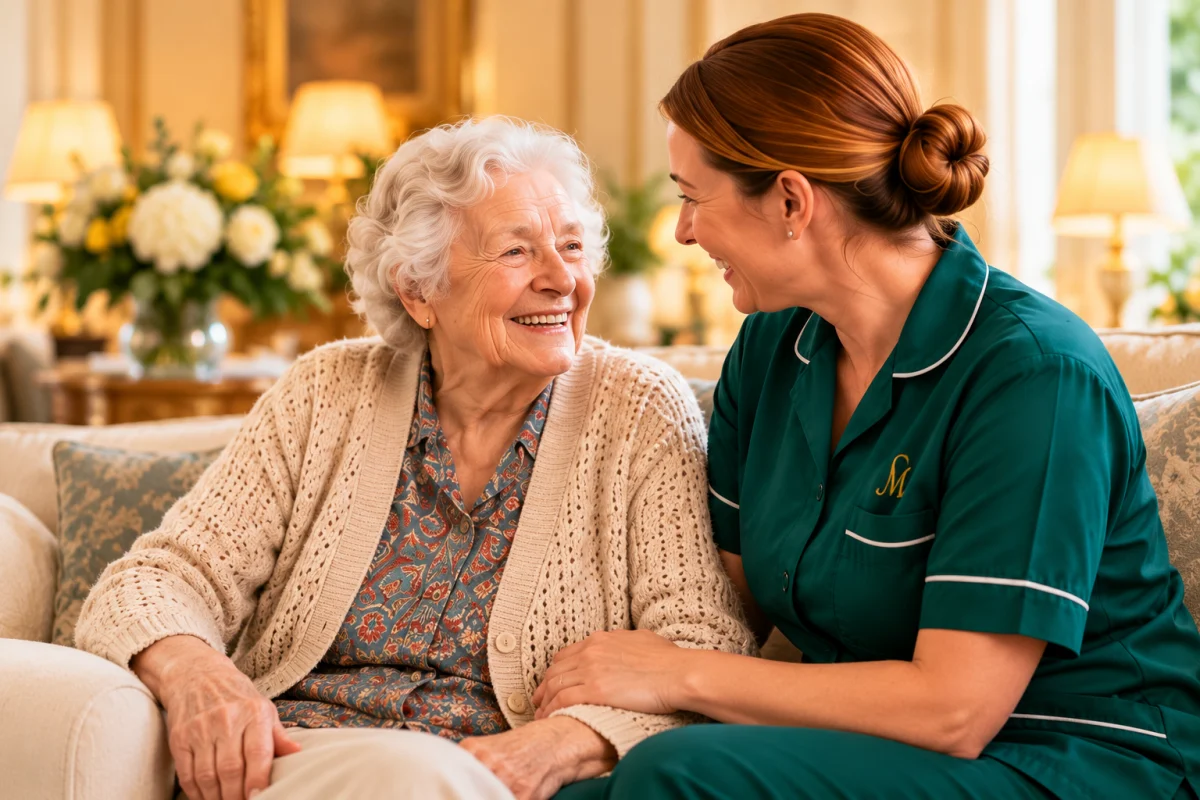
Care can be a supportive home for the future, a short stay after a hospital visit, or specialist care for changing needs. We take time to understand the person, so care feels familiar, consistent and personal.
Explore the types of care

Who pays, and how do I find out?
The cost of care can feel confusing. We can talk you through the options, including local authority support and personal funding, and suggest next steps so you can make an informed decision.
Understanding care funding
Getting a care needs assessment on the NHS website

How do I choose a home?
Choosing a home is a personal decision. It can help to visit, meet the team and see daily life for yourself. We take time to answer your questions so you can feel comfortable and confident.
What to look for when choosing a home

What happens when I visit?
A visit is a chance to look around, meet the team and get a feel for life in the home. There is no pressure and no commitment. We will take time to answer your questions and talk through next steps.
What to expect on a visit
You can look around, meet the people who would care for your relative and ask questions. Bring your relative if you can, and someone else whose judgement you trust. Contact the home to arrange a time that suits you.

How do we move someone in?
When the time feels right, we will guide you through the practical steps. We plan carefully around the person, so the move feels supported.
The move-in process
There is a care assessment first so the home understands the person, followed by a move-in day with the room ready and familiar things in place. You can talk to us about whether starting with a respite stay might help.


A calm word about guilt
It is very common to feel guilty, even when you know care is the right thing. Choosing a care home is an act of love, ensuring safety, companionship and a better quality of life.

Talk it through with us
If you would like to discuss your situation, we are here to listen. A friendly conversation can help you feel clearer about the next step.
Make an enquiryAsked at the very start
Can I arrange care quickly in an emergency?
Does moving into a home mean losing independence?
Can couples stay together?
What should I ask when I phone a care home?
Our fees and funding guide explains care needs assessments, financial assessments and NHS Continuing Healthcare.